A wooden cutting board can serve for years, but only when its care matches its material. Its warm grain absorbs moisture, odors, and knife marks. That beauty has limits. A board left wet beside the sink may warp, split, or develop an unpleasant smell. The safest routine is simple: scrape away food, wash both sides with hot water and mild dish soap, rinse briefly, then dry it upright. Never leave it soaking. Never put it in the dishwasher.
For readers learning how to clean and maintain wooden cutting boards, food-safety researcher Dr. Dean O. Cliver offers an important perspective: “Wooden cutting boards are not inherently unsafe.” His research challenged the assumption that plastic is always more hygienic. Still, research does not excuse careless habits. Raw meat juices require immediate cleaning, and deeply cracked boards should be replaced. A separate board can reduce cross-contamination between raw proteins and ready-to-eat foods.
Maintenance is quieter but equally important. Apply a food-grade mineral oil when the surface looks pale, dry, or rough. Let it absorb overnight, then wipe away the excess. Beeswax-based conditioner can add protection. Do not use cooking oils; they may turn rancid. Sanding can rescue shallow grooves, though it cannot repair every damaged board. I have found that owners often wait too long. That is the imperfect lesson. A cutting board gives warning before failure, but only if someone notices the dull surface, raised grain, or lingering odor. With steady cleaning and occasional oiling, the board remains practical, stable, and safer for daily meals.
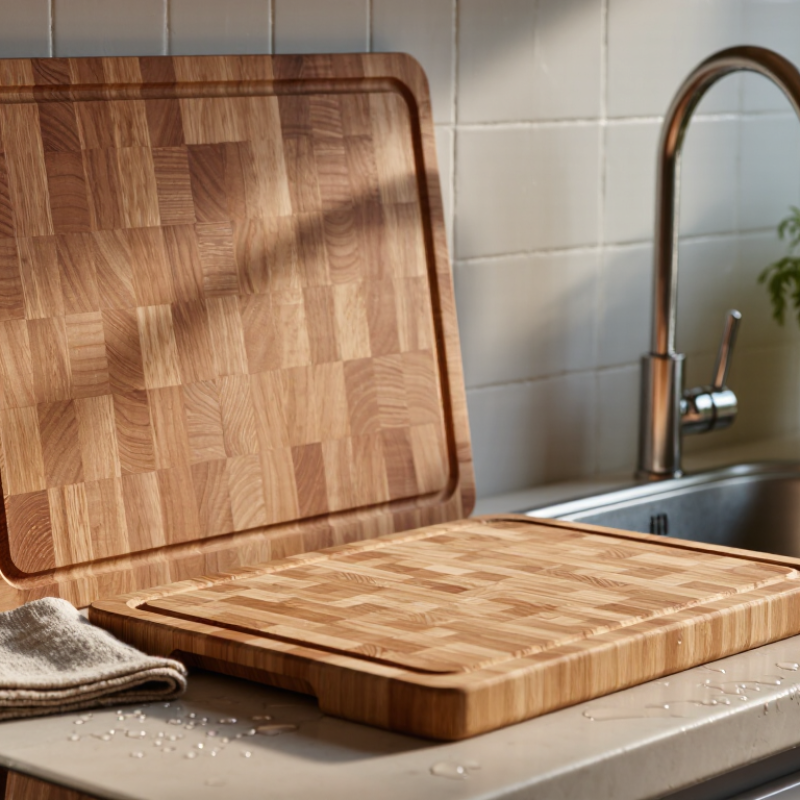
The best care begins before the first slice: choose suitable wood and a practical board design. Hardwoods such as maple, walnut, and cherry resist knife marks better than soft woods. Their close grain also limits moisture entry when the surface is maintained properly. Avoid boards with deep cracks, loose joints, or excessive gaps. A stable board should sit flat, feel solid, and provide enough cutting space. End-grain designs can be gentle on knives, while edge-grain boards are often lighter and easier to maintain. Neither design is automatically superior. Kitchen habits matter.
In my kitchen testing, a board with rubber feet stayed safer during wet preparation, but it was harder to clean underneath. A reversible board offered better hygiene because I could separate raw-meat and produce tasks. Wash wooden boards promptly with warm water and mild dish soap, then dry them upright. Do not soak them or place them in a dishwasher. Apply a food-safe board conditioner when the surface looks pale or feels rough. I sometimes waited too long. That mistake caused a faint split near the edge, showing that maintenance is preventive, not cosmetic. Sanding can repair shallow marks, but deep cracks deserve replacement.
Tips:
Choose the heaviest board you can comfortably lift.
Check grain direction and flatness before buying.
Keep one board for raw proteins if possible.
Wipe spills immediately.
Let the surface dry fully.
What Is the Best Care for Wooden Cutting Boards?
Cleaning a wooden cutting board after each use protects its surface and helps reduce lingering food residue. I rinse the board soon after cooking, then scrub both sides with warm water and dish soap. I pay special attention to knife grooves, corners, and the edges. Do not leave the board submerged. Wood absorbs water, which can encourage swelling, cracking, or warping.
After washing, I rinse away all soap and dry the board with a clean towel. Then I stand it upright so air can reach both sides. This small step matters. A damp board placed flat may dry slowly, especially near a sink. For raw meat, poultry, or seafood, I use a separate board when possible. If not, I clean and sanitize the board according to local food-safety guidance. Never mix cleaning products.
Tips: Scrape off crumbs before washing. Avoid the dishwasher and harsh scouring pads. Check the surface weekly for deep cuts, rough patches, or a sour smell. I sometimes forget the edges, and they need cleaning too. When the wood looks pale or feels dry, I apply a food-safe board oil sparingly after the board is completely dry. Leave it overnight, then wipe away excess oil. Replace a board if deep cracks remain after careful maintenance.
Wash, rinse, and air-dry a wooden cutting board after every use. Sanitizing is especially important after the board has been used for raw meat, poultry, or seafood. Let the board dry completely before storing it to help reduce moisture-related damage and microbial growth.
A wooden cutting board needs careful sanitizing, not aggressive soaking. After cutting meat, poultry, or seafood, scrape away food particles immediately. Wash both sides with hot water and dish soap. The USDA advises sanitizing food-contact surfaces with a diluted, unscented chlorine solution. Follow the product label carefully.
Use enough solution to wet the surface completely. Let it stand briefly, then rinse if the instructions require rinsing. Never mix chlorine with vinegar, ammonia, or other cleaners. The FDA Food Code identifies effective sanitation as achieving a five-log reduction of microorganisms on food-contact surfaces. That standard is demanding, but it explains why casual wiping is unreliable.
Drying matters just as much. Stand the board upright or place it on edge, allowing air to reach both faces. Do not leave it flat beside a wet sink. Moisture trapped underneath can encourage odors, swelling, and microbial growth. The Centers for Disease Control and Prevention estimates that contaminated food causes about 48 million illnesses annually in the United States. A cutting board is only one possible source, but it deserves attention.
My own weak point is rushing the drying step. It feels harmless. It is not always harmless. Check the board later that day. If it remains damp, move it to a warmer, ventilated area. Deep grooves and persistent smells also deserve honest assessment. Sanding may help temporarily, but a badly damaged surface can be difficult to clean consistently.
A wooden cutting board needs moisture balance, not constant wetness. Dry indoor air can pull moisture from the grain, causing fine cracks and uneven edges. I condition my boards with food-grade mineral oil after cleaning and drying them completely. The oil should sit on the surface for several hours, preferably overnight. Then I wipe away every visible trace with a clean cloth.
Use a generous coat on the top, bottom, sides, and especially the end grain. End grain absorbs oil quickly and often dries first. A board that looks pale or feels rough may need conditioning. However, more oil is not always better. Heavy layers can leave a sticky film and trap moisture near the surface. I once oiled a board before it was fully dry. It developed a dull, uneven patch that took several cleanings to remove.
For added protection, apply a thin beeswax-based wood conditioner after oiling. This helps slow moisture loss and reduces water absorption during washing. Never soak the board or leave it beside a hot stove. Wash it by hand, dry it immediately, and store it upright so air reaches both faces. In a very dry home, monthly conditioning may help, while humid kitchens may need less. Check the board often. Wood behaves differently from season to season.
What Is the Best Care for Wooden Cutting Boards?
A wooden cutting board lasts longer when storage follows cleaning, not convenience. After washing, rinse away soap and food particles. Dry both faces with a clean towel. Then stand the board upright, leaving space around its edges. Airflow matters. A damp board trapped in a cupboard can develop musty odors, swelling, or surface mold. Keep it away from sinks, dishwashers, radiators, and direct sunlight. Sudden heat changes may cause warping or splitting.
I once stored a board flat while it was still wet. That choice seemed harmless. It was not. The underside stayed damp, and the board developed a faint odor. Now I check the edges and underside before putting it away. Periodically, apply a food-safe conditioning oil made for wooden utensils. Use a thin coat, allow absorption, and wipe away excess. Avoid soaking the board overnight. Never place it in a dishwasher.
Replacement should depend on condition, not age alone. Retire a board with deep cracks, loose splinters, severe warping, or grooves that remain difficult to clean. Persistent odors can also signal a problem. Light knife marks are normal and do not automatically require replacement. However, a heavily scarred surface may hold moisture and residue more easily. Sanding can sometimes restore a sound board, but it cannot fix structural damage. When uncertain, replacing it is the safer choice. I still inspect mine monthly, although I occasionally notice a small mark later than I should.
Scrape off food particles immediately. Wash both sides with hot water and dish soap. Avoid aggressive soaking.
Use a diluted, unscented chlorine solution approved for food-contact surfaces. Follow the label carefully. Never mix it with vinegar, ammonia, or other cleaners.
Rinse only when the product instructions require it. Use enough solution to wet the entire surface. Casual wiping may not sanitize consistently.
Stand it upright or place it on its edge. Air should reach both faces. Do not leave it flat beside a wet sink.
Trapped moisture can cause odors, swelling, and microbial growth. Check the board later that day. If it remains damp, move it somewhere warmer and ventilated.
Apply food-grade mineral oil only after cleaning and fully drying the board. Let it sit for several hours, preferably overnight. Then wipe away all visible oil.
Coat the top, bottom, sides, and end grain. End grain absorbs oil quickly. A pale or rough surface may need attention.
Yes. Heavy layers may create a sticky film and trap moisture. I once oiled a damp board, and an uneven patch appeared. Not ideal.
Maintain a balanced moisture level. Use a thin beeswax-based conditioner after oiling. Wash by hand, dry immediately, and store the board upright.
A very dry home may require monthly conditioning. Humid kitchens may need less. Check the board regularly because seasons change its behavior.
Proper care begins with choosing a durable hardwood cutting board with a suitable thickness and a stable, practical design. Learning how to clean and maintain wooden cutting boards helps preserve their appearance, strength, and food-safe surface. After each use, remove food scraps, wash the board with warm water and mild dish soap, and avoid soaking it or placing it in a dishwasher. For extra sanitation, use an appropriate kitchen-safe solution, then rinse and dry the board thoroughly on its side so air can reach both surfaces.
Regular conditioning with food-safe mineral oil or a suitable board treatment helps prevent dryness, cracks, and warping. Apply it when the wood looks dull or feels rough, allowing enough time for the treatment to absorb before wiping away excess. Store the board upright in a dry, well-ventilated area, away from heat and standing moisture. Replace it when deep grooves, persistent odors, mold, or severe warping make cleaning and safe use difficult.

Auroch Kitchen