A cutting board can look clean while holding yesterday’s onion scent, beet-purple marks, or invisible food residue. These problems are not only unpleasant. Deep stains and lingering odors may signal that moisture, oils, or food particles have entered scratches in the surface. Learning how to prevent staining and odors on cutting boards starts with understanding the board’s material, daily habits, and drying time.
Dr. Benjamin Chapman, a food safety researcher, has emphasized, “Clean is not the same as safe.” That distinction matters in every kitchen. Rinsing a board under warm water may remove crumbs, but it may not remove raw meat juices or strong aromatic oils. A wooden board needs gentle washing, prompt drying, and occasional conditioning. Plastic boards need close inspection, especially around knife grooves. Neither material is completely maintenance-free.
Small habits make a visible difference. Use one board for raw proteins and another for produce. Wipe beet juice quickly, before it settles. Dry the board upright, not flat against a damp counter. Baking soda can help absorb odors, but it cannot repair a board that stays wet for hours. That part is easy to underestimate.
Even careful cooks make mistakes. I have left a board near the sink overnight and noticed a sour smell the next morning. The lesson was simple: cleaning is only half the job. This guide will examine practical routines, material-specific care, and warning signs that suggest replacement may be wiser than another deep scrub.
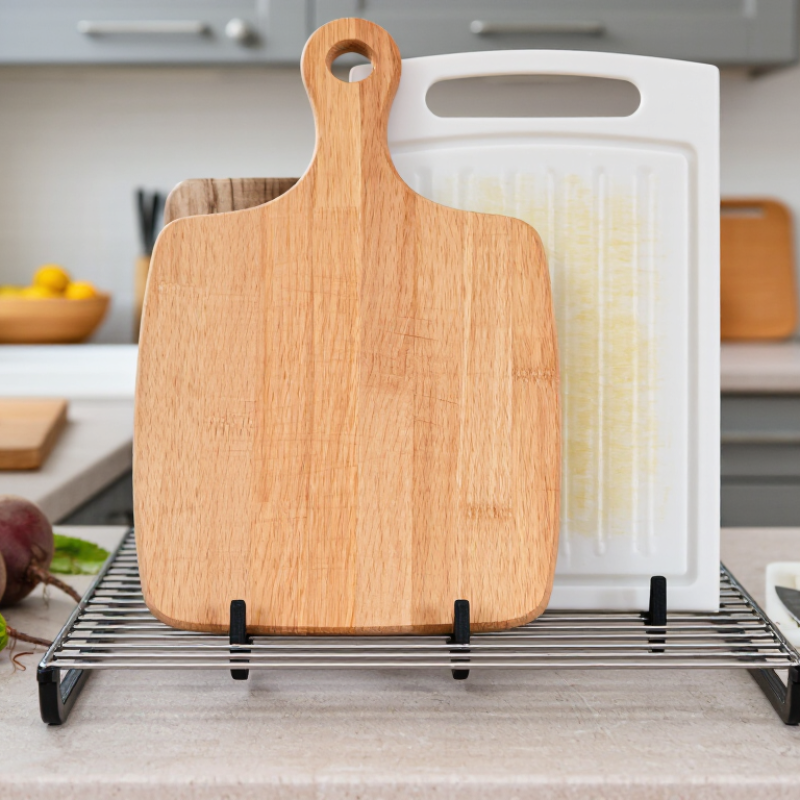
Cutting boards develop stains and odors because food residue settles into knife grooves and tiny surface pores.
Raw meat juices, onion oils, fish proteins, and colorful spices can remain after a quick rinse. Moisture then gives bacteria and odor-producing compounds more time to persist.
Plastic boards are not automatically safer. Deep scratches can hold residue, while wooden boards may absorb liquids if they stay wet.
48 million
illnesses
128,000
hospitalizations
3,000
deaths annually in the United States
The CDC estimates that foodborne illnesses cause about 48 million illnesses, 128,000 hospitalizations, and 3,000 deaths annually in the United States. A cutting board is only one possible contamination point, but it deserves careful handling.
USDA Food Safety and Inspection Service guidance recommends washing boards with hot, soapy water after preparation. It also advises using separate boards for raw proteins and ready-to-eat foods.
Clean appearance can mislead. I have found that a board smelling clean may still feel greasy around old cuts.
Tips:
Rinse immediately, scrub grooves with a stiff brush, and dry the board upright.
For sanitizing, USDA guidance allows one tablespoon of unscented liquid chlorine bleach in one gallon of water.
Follow the product label, and never mix cleaning chemicals.
Replace boards when cracks, deep cuts, or persistent odors remain.
A light sanding may help some wooden boards, but it is not a complete repair.
How to Prevent Stains and Odors on Cutting Boards?
Material choice changes how much cleaning a cutting board needs. The 2022 FDA Food Code describes food-contact surfaces as smooth, durable, and easily cleanable. A dense hardwood board can resist deep knife damage when maintained with food-safe mineral oil. It should never soak in a sink. Nonporous plastic boards dry faster and suit raw meat preparation. Replace them when grooves remain visibly dark after washing. Bamboo can be durable, but poor sealing may encourage splitting and odor retention. Glass looks clean, yet it can quickly dull knives. I learned that the hard way.
Use different boards for raw meat and ready-to-eat foods. USDA Food Safety and Inspection Service guidance supports this separation to reduce cross-contamination. The CDC estimates that foodborne illness causes about 48 million illnesses, 128,000 hospitalizations, and 3,000 deaths annually in the United States. A board is not the only risk, but it is a frequent contact surface. Keep a board scraper, stiff nylon brush, and drying rack nearby. Scrape residue before washing with hot water and dish detergent. Let the board stand upright until completely dry. For extra sanitation, follow the sanitizer label and the 2022 FDA Food Code requirements. Avoid relying on lemon or salt alone; they may freshen the surface without reliably removing contamination. My own weak habit was stacking wet boards flat. That mistake created a sour smell overnight.
A cutting board can hold raw-meat juices, onion oils, and crumbs in tiny knife grooves. Cleaning it immediately after each use removes residue before it dries and feeds odor-causing microbes. The CDC estimates that 48 million people in the United States experience foodborne illness each year. A clean food-contact surface matters.
Do it now. Scrape off debris, then wash the board with hot water and dish soap. Use a separate brush for deep grooves, and rinse both sides, including the edges. Dry it upright so air reaches the entire surface. I sometimes leave a board beside the sink for later. That habit is convenient, but it allows moisture and food particles to linger. The USDA Food Safety and Inspection Service advises washing cutting boards with hot, soapy water after preparing each food item, especially raw meat, poultry, or seafood.
For extra protection, sanitize the clean board with a food-safe solution, following its label directions. Never mix cleaning chemicals. The 2022 FDA Food Code emphasizes cleaning food-contact surfaces at suitable intervals and preventing contamination between uses. Replace boards with deep cracks, persistent smells, or rough areas that resist washing. A lemon may reduce a sharp odor temporarily, but it cannot replace washing and sanitizing. My own mistake was trusting a fresh scent too quickly. Cleanliness needs evidence: no visible residue, no greasy film, and complete drying.
A cutting board can look clean while holding juices in tiny knife grooves. The CDC estimates that foodborne illness causes about 48 million illnesses in the United States each year. Careful board sanitation matters.
After cutting raw meat, scrub the board with hot water and dish soap. Rinse away all residue. The FDA Food Code 2022 supports sanitizing food-contact surfaces after cleaning. Use a properly diluted, unscented chlorine solution according to local guidance. Never mix it with vinegar, ammonia, or other cleaners. Keep the surface visibly wet for the stated contact time, then rinse when the label requires it. Air-dry the board upright. Towel drying can return bacteria to the surface.
Odor control starts with quick washing, not aggressive scraping. For lingering smells, rub a damp board with coarse salt and half a lemon, then rinse thoroughly. This can freshen the surface, but it is not a validated sanitizer. USDA Food Safety and Inspection Service guidance also recommends replacing boards with deep grooves that resist cleaning. Plastic boards tolerate dishwashers better, while wood boards may warp from prolonged soaking or high heat. I used to leave boards flat beside the sink. That trapped moisture underneath. A raised drying position works better, although I still check the underside. If cracks remain dark after cleaning, discard the board rather than masking the odor.
How to Prevent Stains and Odors on Cutting Boards?
Storing and maintaining a cutting board well begins with drying it completely. After washing, stand the board upright so air reaches both sides. A damp board trapped in a cabinet can develop sour odors within days. The USDA advises washing cutting boards with hot, soapy water after each use. It also recommends sanitizing surfaces that contact raw meat, poultry, or seafood. I once stored a board flat too soon. The hidden underside stayed wet.
Do not stack boards while they are warm or damp. Leave a small air gap between each board. Store them away from sinks, steam, and direct heat. Excess heat can warp wood and split plastic. For stubborn smells, scrub the surface with coarse salt and a cut lemon, then rinse and dry thoroughly. This method helps, but it is not a substitute for proper sanitizing. The FDA Food Code 2022 requires food-contact surfaces to be cleaned and sanitized regularly.
Surface damage matters. Deep knife grooves can hold moisture and food particles. Replace or professionally resurface a board when cleaning no longer removes stains or odors. USDA’s 2021 observational study found that 48% of participants failed to wash their hands before food preparation. Clean storage cannot correct poor handling. Keep separate boards for raw proteins and ready-to-eat foods. I sometimes forget that small cracks deserve attention before they become a hygiene problem.
After washing a cutting board with hot, soapy water, food-safety guidance commonly recommends an unscented liquid chlorine bleach solution of 1 tablespoon per gallon of water. The chart converts this ratio to metric volumes.
To reduce stains and odors, rinse the board thoroughly, let it air-dry completely, and store it upright or in a well-ventilated location. Use separate boards for raw meat, poultry, seafood, and ready-to-eat foods. Always follow the bleach product label and never mix bleach with other cleaners.
Nonporous plastic usually dries quickly and handles frequent washing well. It suits raw meat preparation. Replace it when dark grooves remain after cleaning.
No. Use separate boards for raw meat and ready-to-eat foods. This reduces cross-contamination. A simple color system can help.
Scrape away crumbs and food residue immediately. Wash both sides, the edges, and knife grooves with hot water and dish soap. Rinse thoroughly.
Stand it upright on a drying rack. Air should reach both faces and the bottom edge. Avoid stacking wet boards flat. I made that mistake, and a sour smell appeared overnight.
No. Lemon and salt may freshen odors, but they do not reliably sanitize surfaces. Use them only after washing, not instead of washing.
Clean the board first, then use a suitable food-safe sanitizing solution. Follow the product label and required contact time. Never mix cleaning chemicals.
Replace it when deep cracks, rough areas, or dark grooves resist cleaning. Persistent odors also matter. A fresh scent can hide a problem.
They can be safe when smooth, properly sealed, and kept dry. Do not soak them in a sink or expose them to prolonged high heat. Poor sealing may encourage splitting and odor retention.
Glass is easy to wipe clean, but it can dull knives quickly. I learned that the hard way. A smoother cleaning surface may create sharper tool problems.
Cutting boards can develop stains and odors when food juices, oils, and bacteria remain trapped in scratches or absorbent surfaces. Understanding how different materials react to moisture and strong-smelling ingredients is the first step in keeping boards fresh. Choosing a suitable board, using separate tools for raw foods and produce, and avoiding overly sharp or damaging utensils can also make daily care easier.
To learn how to prevent staining and odors on cutting boards, clean each board immediately after use with warm water and mild dish soap, paying special attention to cuts and edges. Sanitize carefully with a food-safe solution or appropriate heat method, then remove lingering smells with gentle deodorizing ingredients that will not damage the surface. Always rinse thoroughly and dry the board completely before storing it upright or in a well-ventilated area. Regularly inspect for deep cracks, excessive wear, or persistent odors, and replace boards when they can no longer be cleaned effectively.

Auroch Kitchen