Choosing what is the safest material for food prep surfaces requires more than comparing glossy countertops. The real test is daily cleaning, damage control, and consistent maintenance. A surface may look hygienic, yet harbor residue inside knife cuts, seams, or rough patches. That detail matters.
Food safety specialist Dr. Ben Chapman explains, “The safest surface is one you can clean and maintain properly.” His point is practical, not glamorous. Stainless steel is highly nonporous, durable, and easy to sanitize. Tempered glass also resists absorption, although it can dull knives and create sliding hazards. High-quality plastic boards are useful, especially when separated for raw meat and ready-to-eat foods. Replace them when deep grooves remain after washing.
Wood deserves a more careful discussion. Hard maple and other dense hardwoods can perform safely when washed, dried, and maintained correctly. They are not automatically dangerous. Still, a damp wooden board left beside the sink is a poor choice. I have seen attractive boards become neglected surfaces because their owners treated appearance as proof of cleanliness. That is a mistake.
There is no perfect material.
This guide will examine porosity, durability, sanitation, cross-contamination, and real kitchen habits. It will also question popular claims that sound reassuring but lack context. The safest preparation surface is usually the one that supports reliable behavior: prompt washing, thorough drying, regular inspection, and sensible separation of foods. Safety is built through routine, not marketing language.
What Makes a Food Prep Surface Safe?
A safe food prep surface is more than a popular material. It should be nonporous, durable, stable, and easy to clean. Stainless steel and quality plastic often meet these needs because they resist moisture and deep staining. However, the surface condition matters more than appearance. A scratched, cracked, or warped board can shelter food residue and bacteria.
From kitchen experience, I have found that cleaning becomes difficult when grooves feel rough under a sponge. That detail is easy to ignore. Follow the manufacturer’s care instructions, wash the surface after raw meat, and let it dry fully before storage. Hot water and suitable dish soap remove many residues, but they do not repair damage. Food-contact safety also depends on the finish, adhesives, and coatings used during manufacturing. “Food-safe” should be supported by clear product information, not just a vague label.
Tips:
Keep separate surfaces for raw proteins and ready-to-eat foods. Replace boards with deep cuts or persistent odors. Do not use a surface that flakes, peels, or changes texture. Wooden boards can be practical, but they require careful drying and regular inspection. I once trusted a board because it looked clean; its underside stayed damp. That was a useful reminder: safety is a daily habit, not a material claim.
Comparing Common Food Prep Surface Materials
What Is the Safest Material for Food Prep Surfaces?
Comparing Common Food Prep Surface Materials
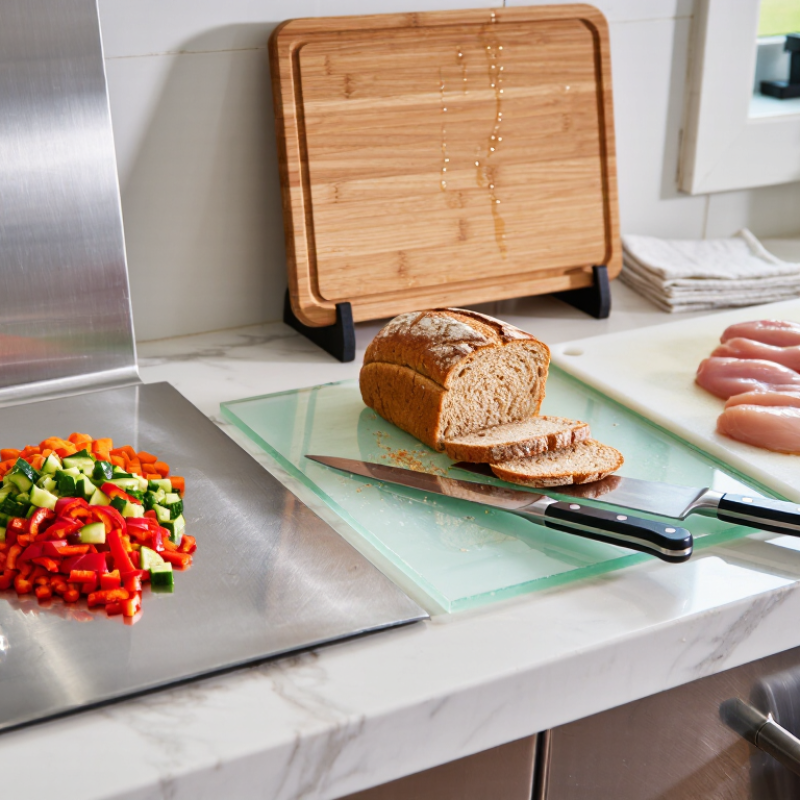
No single surface is safest for every task. Stainless steel is nonporous, durable, and easy to sanitize after preparing raw meat or fish. It resists stains and odors, but knives can lose their edge faster on its hard surface. Glass is also nonporous and simple to clean. However, it may damage knives and feels unforgiving during chopping.
Plastic boards are lightweight and practical. Their shallow grooves can hold moisture and food residue after repeated cutting. I replace heavily scarred boards rather than trusting a perfect-looking wash. Wood requires more care, yet a clean, dry hardwood board can be a reliable choice. It is gentler on knives and comfortable for vegetables, bread, and herbs. Porous stone surfaces look attractive, but they can be heavy, cold, and difficult to maintain. Some finishes may also stain or react with acidic foods.
Tips: Use separate boards for raw proteins and ready-to-eat foods. Wash surfaces with hot, soapy water after each use. Dry them fully before storage. Check seams, cracks, and deep cuts every week. I sometimes miss a small groove near the handle, so I inspect that area deliberately. Replace any surface that remains stained, cracked, or difficult to clean. Keep raw-food boards away from clean plates and freshly chopped produce. Surface material matters, but cleaning habits matter more.
How Surface Porosity Affects Food Safety
What Is the Safest Material for Food Prep Surfaces?
Surface porosity strongly affects how easily a prep surface can be cleaned. A smooth, nonporous surface offers fewer spaces for moisture and food residue to remain. Stainless steel, tempered glass, and intact food-grade plastic are commonly practical choices. Porous materials can absorb liquid into tiny openings. That trapped moisture may support bacterial growth if cleaning and drying are incomplete. Not every porous board is unsafe. Condition matters.
In a busy kitchen, I inspect the surface after preparing raw chicken or fish. I wash it with hot water and dish soap, then use a suitable food-contact sanitizer. Follow the product label. Deep knife grooves deserve attention because cloths may slide over them without removing residue. I also clean the edges and underside, where dripping juices can collect. Dry it fully. Airflow helps.
Material alone does not guarantee food safety. A smooth board becomes risky when it stays damp, develops cracks, or receives careless cleaning. Public-health guidance generally favors surfaces that are durable, nonabsorbent, and easy to sanitize. Some wooden boards may perform well when maintained, but their porosity requires more discipline. I have underestimated how quickly a small groove can collect crumbs and liquid. Small cracks are easy to miss. When a surface cannot be cleaned reliably, replacing it may be the safer choice, even when it still looks usable.
What Is the Safest Material for Food Prep Surfaces?
Approximate 24-hour water absorption by mass. Lower absorption generally indicates a less porous, easier-to-clean surface.
Glass and stainless steel are essentially nonporous, while HDPE and polypropylene absorb only trace amounts of water. Wood is naturally porous and can absorb moisture through its grain. In practice, food safety also depends on a smooth finish, regular cleaning and sanitizing, proper drying, and replacing surfaces that are deeply scratched or cracked. Values are approximate and can vary with material grade, finish, density, and test conditions.
Cleaning and Sanitizing Food Prep Surfaces
What Is the Safest Material for Food Prep Surfaces?
Cleaning and sanitizing food preparation surfaces are separate tasks. A nonporous material, such as stainless steel, tempered glass, or sealed stone, is usually easier to clean. It gives bacteria fewer places to hide. However, no surface stays safe without regular care. Cracks, deep scratches, and worn sealants can trap food residue, even when the counter looks clean.
In my kitchen, I remove crumbs and spills immediately with warm water and dish soap. I use a clean cloth, not one left beside the sink for hours. After cleaning, I apply a food-contact-approved sanitizer according to its label. The required contact time matters. Wiping it away too soon may reduce its effect. Then I let the surface air-dry. It feels slower, but it helps prevent recontamination from a damp towel. I am still improving this habit.
Tips:
Use separate cutting boards for raw meat and ready-to-eat foods. Wash boards after every use, including the edges and underside. Replace any board with deep grooves or permanent stains. Keep sanitizer away from food until the surface has been properly treated and rinsed, when the instructions require rinsing. Never mix cleaning chemicals. Freshly washed hands also matter; a clean counter cannot correct poor hand hygiene.
Choosing the Safest Surface for Different Kitchen Tasks
The safest surface depends on the task, not one universal material. For raw poultry, fish, and meat, I prefer a smooth, nonporous board made from plastic or stainless steel. These materials resist liquid absorption and can tolerate thorough washing. The 2022 FDA Food Code recommends food-contact surfaces that are smooth, durable, and easily cleanable. That guidance matters when raw juices collect around knife marks.
Use separate surfaces for ready-to-eat foods. A clean wooden board works well for bread, herbs, and vegetables. Its firm texture feels comfortable under a knife. However, deep cuts can trap residue.
A USDA food safety report advises separating raw and ready-to-eat foods, because cross-contamination remains a major household risk. I once used one board for everything. It looked clean, but that was not enough.
For raw proteins, choose a dishwasher-safe plastic board when possible. Replace it when grooves become difficult to scrub. Glass is nonporous, but it can slide and quickly dull knives. Stone may look hygienic, yet some surfaces are porous or poorly sealed.
CDC estimates that foodborne illness causes about 48 million illnesses annually in the United States, with approximately 128,000 hospitalizations. Cleaning still matters more than appearance. Wash with hot, soapy water, sanitize when appropriate, and let the surface dry fully. I still find drying easy to overlook.
Conclusion
When considering what is the safest material for food prep surfaces, the most important factors are hygiene, durability, nonporosity, and ease of cleaning. A safe surface should resist cracks, deep scratches, stains, and moisture absorption, since damaged or porous areas can trap bacteria and food residue. Common materials differ in performance: some are highly durable and nonporous, while others may be gentler on knives but require more careful maintenance. The best choice depends on how the surface will be used and how often it can be cleaned.
Proper cleaning and sanitizing are just as important as the material itself. Food prep surfaces should be washed after each task, especially when handling raw meat, seafood, eggs, or produce. Separate surfaces can help prevent cross-contamination, while smooth, nonporous options are generally easier to sanitize. For chopping, a resilient surface that protects knives may be preferable; for rolling dough or preparing ready-to-eat foods, a smooth, easily cleaned surface may be safer. Regular inspection and replacement of heavily damaged surfaces further support kitchen safety.

 Auroch Kitchen